A Snowman Design That Works on Real Projects
Let’s talk about this Snowman with Christmas Sock embroidery design from a practical standpoint. When you’re in the business of making things—whether for clients, your shop, or gifts—a design needs to do more than just look cute on the screen. It needs to stitch out cleanly, translate well to fabric, and fit the product you’re making. This one has a lot of promise.
The First Impression: Friendly and Festive, Not Overdone
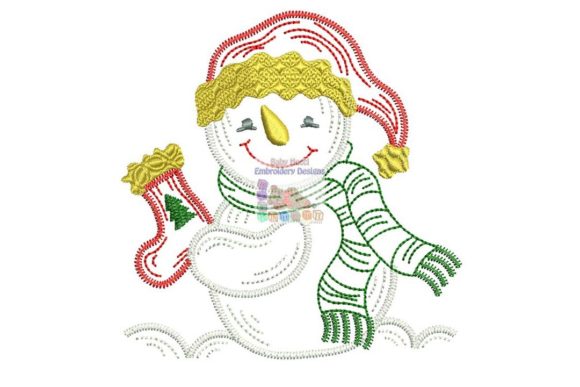
Opening this embroidery file, the immediate vibe is warmth. It’s a cheerful, classic snowman holding a Christmas sock, not a hyper-detailed, overly complex illustration. That’s a good sign. The shapes are clear and rounded, which means satin stitches and fill areas should lay down smoothly without a lot of tricky, tiny corners. The overall layout feels balanced; the snowman is the clear focus, with the sock adding that holiday touch without dominating the scene. This isn’t a design shouting for attention—it’s inviting. That personality makes it a natural fit for cozy, personal items: a family’s holiday sweatshirt, a gift for a friend, or a nursery decoration.
Where This Design Finds Its Home
Based on the description mentioning towels, t-shirts, sweatshirts, and decorative pillows, the designer’s intent is broad applicability. In practice, I’ve found designs like this shine brightest on certain substrates.
Imagine stitching it on a heavyweight cotton sweatshirt. The stitch density and fills will anchor well into that fabric, and the friendly motif becomes a wearable piece of holiday cheer. It would also be a standout on a tea towel or apron—practical kitchen items that benefit from a festive, handmade touch. For a small business or Etsy seller, this design could be the centerpiece of a popular holiday tote bag or a simple, giftable pillow cover.
However, the mention of “any fabric or clothes” requires a bit of professional caution. While versatile, not every application will be ideal.
Applications That Require Extra Consideration
Some projects need more planning. On very thin or stretchy fabrics, like a fine t-shirt, the potential fill stitch areas in the snowman’s body could pose a challenge without the correct stabilizer strategy. Stitching onto a curved surface like a cap requires checking that the design’s width fits the available flat area comfortably.
Dark fabrics are another consideration. While the design likely uses lighter thread colors, the overall contrast and readability of the snowman’s form against a black or navy background should be tested first on scrap fabric. Small details, like the sock’s potential patterning or the snowman’s features, might need slight thread color adjustments to maintain clarity on dark materials. This isn’t a drawback; it’s standard professional practice for any embroidery file.
Thinking Like a Customer: The Finished Product Appeal
When a customer sees this embroidered on a finished product, what resonates? The cleanliness of the stitchout. If the lines are smooth and the fills are even, it elevates the perceived value. For a handmade product or personalized gift, that stitching clarity builds customer trust—it looks professional and cared for. For a craft business item, it reinforces brand consistency: you deliver quality work. The design itself is highly recognizable and giftable, which directly boosts buyer engagement in an Etsy listing or at a craft fair. People immediately understand the holiday sentiment.
Practical Notes for the Working Designer
Before running this snowman design on a client’s item or your own merchandise, do your homework. Always test it on a scrap of the actual project fabric first. This reveals how the stitch density interacts with your fabric’s texture and whether your stabilizer choice is correct.
Check thread color contrast thoroughly. Create simple black and white mockups to see the form, and compare how it might look on both light and dark backgrounds in your digital preview software. Inspect the small details in the test stitchout—are the eyes, smile, and sock details crisp? If they’re too fine, you might adjust your hoop size or stitch settings.
Crucially, confirm the licensing terms for this embroidery file before using it for commercial projects or selling finished items. The description suggests broad use, but you must verify the specifics to ensure your craft business or small shop product is covered. Also, while the description lists many applications, confirming the exact supported hoop sizes and machine file formats is a necessary step.
When used thoughtfully—with proper stabilizer on suitable fabrics—this Snowman with Christmas Sock design becomes a reliable, charming asset. It’s not just a digital file; it’s a potential smile on a holiday sweatshirt, a touch of warmth on a kitchen towel, or a sellable piece of holiday magic in your shop. That’s the real test for any embroidery design, and this one passes with a friendly nod.