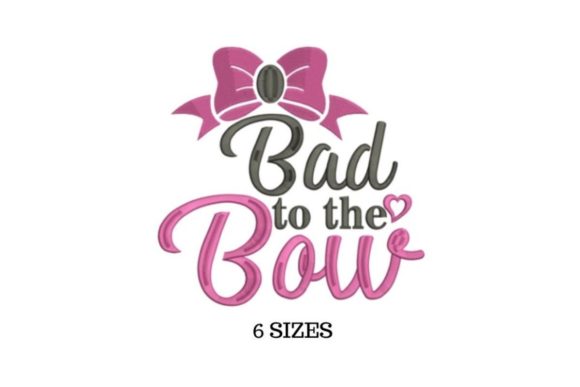
Bad to Bow: A Designer Review for Merch & Patches
When a new embroidery design lands on my desk for potential business use, my first question is always: can this design build a brand? Today, I'm looking at Bad to Bow, a machine embroidery design described as cute and perfect for completing a collection. My review isn't about decorating a kid's jacket; it’s about evaluating how this design performs as a serious asset for small business merchandise, branded patches, and commercial embroidery projects.
First Impression: Playful Charm with Professional Potential
The title Bad to Bow instantly suggests a transformation, a story. For a business, this narrative can be powerful. The design feels inherently playful and friendly, which is a fantastic starting point for brands wanting to connect on a personal level. Think of a local bakery, a creative pet brand, a children’s boutique, or a family-run café. This isn’t a stark, corporate logo; it’s an approachable accent that whispers "handmade" and "personal." That aesthetic is gold in today’s market where authenticity drives customer engagement. However, the key for business use is whether this playful charm can translate into a clean, reproducible, and professional-looking finished product on various items.
Real-World Business Applications for Bad to Bow
Let’s move from impression to application. I envision several strong use cases where Bad to Bow could elevate a small business’s visual identity.
Embroidered Patches for Brand Flexibility
A standalone embroidered patch based on this design could be incredibly versatile. A handmade shop could sew it onto their product packaging as a signature seal. A florist could use it as a merit badge-style patch on their delivery driver’s tote bags. For an Etsy seller, a patch on the corner of a shipped garment adds a memorable, branded touch that enhances the handmade product feel. Patches also allow for inventory—you can produce a batch and apply them to various custom apparel items as needed, from aprons to caps.
Uniform & Apparel Accents that Build Identity
Consider this as a chest logo accent on staff polo shirts for a playful business, or a subtle sleeve detail. On an apron for a bakery or café, Bad to Bow would be a charming, conversation-starting detail that makes staff uniforms feel less generic and more part of the brand story. As a cap embroidery design, its friendly character could work well for businesses with a relaxed, community-focused vibe.
Merchandise & Customer Gift Enhancement
This is where the design’s described "cute" factor directly translates to value. Embroidered onto tote bags, tea towels, or baby bibs, Bad to Bow becomes sellable merchandise or a thank-you gift for loyal customers. It completes a collection, as the description says, by giving a cohesive visual theme to a line of small business merch. For a creative studio or boutique, it could be the perfect decorative accent on limited-run items, increasing perceived value and visual consistency across products.
Careful Considerations for Production Success
Professional results depend on anticipating challenges. Here’s where a business must apply an embroidery designer’s scrutiny.
Scale & Placement Matter
The phrase "you can sew it on any kind of clothes or accessories" is a promise, but in commercial embroidery, we test it. Before any production run, you must test this embroidery file at a small patch size. If the design has intricate details or tiny lettering, shrinking it for a cap front or a product label might cause stitch crowding and loss of definition. Always create a mockup for client approval, ideally a printable mockup on a photo of the actual item like a cap or apron, to visualize scale.
Fabric, Color, and Durability
The design must perform on the actual materials. For dark uniforms or bags, review thread color contrast—will the chosen colors pop sufficiently? Test on real fabric samples that match your final items, using the proper stabilizer for that fabric texture. Items like work shirts or aprons that need frequent washing require a robust design with good stitch integrity; check that outlines are not too delicate. High stitch density in areas can make a design stiff and uncomfortable on caps or curved surfaces; a test hoop is essential.
The Critical Pre-Production Checklist
- Test it in black and white first. This reveals the pure structure and balance of the design without color influencing your judgment.
- Inspect spacing and clarity. Ensure elements are distinct enough to read as a brand mark when sized down.
- Confirm the hoop size required matches the capabilities of your machine and the size of your target item.
- Compare it beside your other design assets. Does Bad to Bow fit your brand’s visual family? It should complement, not clash.
- Confirm commercial licensing before business use. The description provided doesn’t specify license terms; you must verify that your intended use is permitted by the file seller.
The Impact on Brand Identity & Customer Perception
Ultimately, using an embroidery design like this is a branding decision. Bad to Bow, applied consistently and professionally, can strengthen brand identity by injecting a specific personality—fun, transformative, caring. That personality fosters customer trust and recognition. Seeing the same charming emblem on a staff apron, a store tote, and an event merch pin creates a cohesive world. It signals attention to detail, which elevates professionalism. For a handmade brand, it underscores the artisan touch, directly boosting product value and buyer engagement. Customers don’t just buy a product; they buy into the story the design hints at.
Final Designer Notes for Business Implementation
As a professional, I see Bad to Bow as a strong candidate for businesses whose brand voice aligns with its playful, friendly narrative. Its success hinges on rigorous technical preparation. Never skip the test phase. Treat this digital embroidery file as a key design asset. Map out exactly where it will live across your merchandise and uniforms. By doing so, you transform a "cute embroidery" into a reliable, revenue-generating, and brand-building component of your visual identity. Remember, in the world of small business merch, the right embroidery isn’t just decoration; it’s a signature.