Sassy Lassy: A First Impression for Crafters and Clients
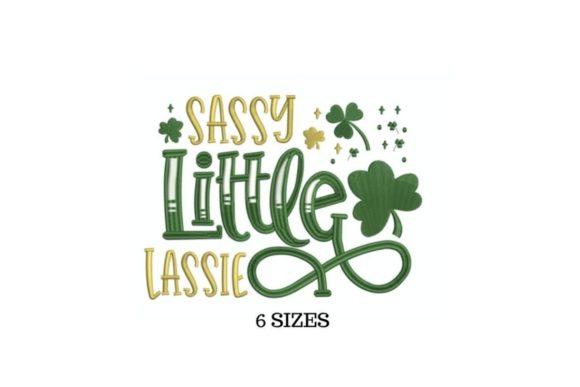
When a design file named Sassy Lassy lands on my desktop, my first thought isn't about the stitches—it’s about the story it will tell on a finished product. This St. Patrick’s Day embroidery design immediately strikes a chord with its playful, celebratory mood. The name itself hints at a personality: not overly formal, but charming and full of spirit. For anyone marking a baby’s first holiday, or creating a gift that captures that joyful milestone, the visual theme feels instinctively right.
Where Sassy Lassy Finds Its Perfect Home
The layout and detail level suggest this isn't a tiny accent piece, but a central, celebratory statement. I envision it stitched onto a crisp white baby onesie, the greens and golds popping against the fabric. It would be equally delightful on a nursery pillow cover or a lightweight blanket, becoming a keepsake. For crafters and small business owners, its application extends beyond baby items. Think of a custom tote bag for a March craft fair, an embroidered patch on a denim jacket for a festive touch, or a simple kitchen towel as a holiday hostess gift. The design’s personality lends itself to products that are meant to be seen and smiled at.
Practical Performance on Real Products
In real-life embroidery situations, the success of a design like Sassy Lassy hinges on its execution. On a heavyweight sweatshirt, the stitches would need to be dense enough to stand up to the texture without looking muddy. On a baby’s soft cotton garment, the stitch density must be balanced to avoid a stiff, uncomfortable result. I’d strongly advise testing this machine embroidery design on scrap fabric first, mimicking the exact fabric and stabilizer combination of your final project. This reveals how small details, like any potential tiny lettering or intricate corners, will translate from digital file to physical thread.
For apparel decorators and Etsy sellers, visual appeal is currency. A clean, crisp rendition of Sassy Lassy on a product elevates its perceived value. It signals care and professionalism, building customer trust in your handmade presentation. When a buyer sees a holiday-themed baby bib or a personalized cap with this design stitched clearly, with good thread color contrast and no puckering, it transforms from a simple item into a thoughtful gift. That giftability is a powerful driver for engagement in small shop merchandise.
Navigating the Tricky Terrain: Where to Use Caution
While Sassy Lassy feels versatile, an experienced eye knows where to proceed carefully. If the design has areas of high stitch density, placing it on very thin or stretchy fabric without the correct stabilizer could lead to distortion. Embroidering on dark fabric requires a thoughtful review of thread colors—some shades might need to be brightened to maintain clarity against a dark background.
Curved surfaces, like caps, can be challenging if the design isn’t optimized for such contours. Similarly, if you’re considering a very small hoop size to create a miniature version for a tiny baby item, inspect how the design’s elements compress. Would the charming details become a blurred lump? Always compare how it looks in both light and dark fabric mockups, even simple black and white digital previews, to judge its adaptability.
Products destined for frequent washing, like baby clothes or kitchen towels, need a robust stitch structure. Check that the fill stitches and satin stitches are solid enough to withstand laundering without fraying prematurely. This is a crucial step for anyone creating commercial embroidery projects or durable boutique products.
The Designer’s Notes: Before You Hit Start
My workflow always includes a pre-flight checklist. For a design like this, I’d confirm the available embroidery file formats against my machine’s compatibility. I’d note the thread color palette suggested and consider if I might adjust a shade for better contrast on my specific project fabric. Crucially, I’d verify the licensing terms. If I’m planning to sell the finished tote bags or baby blankets at a craft fair, or use the design as part of my small business’s product line, I need to know if the digital embroidery file is cleared for commercial use. This step protects your craft business and ensures you’re using the design assets correctly.
Finally, think about the end viewer. A parent receiving a “First St. Patrick’s Day” bib with Sassy Lassy embroidered on it isn’t analyzing stitch types; they’re feeling the emotion. Our job as makers is to ensure the technical execution is so sound that it effortlessly delivers that feeling. By testing, adjusting stabilizer for the fabric texture, and choosing the right hoop size, you make the design’s playful spirit come alive in thread. That’s what turns a good digital product into a great finished product, one that earns compliments and repeats business.
In essence, Sassy Lassy presents a lovely opportunity for holiday-focused projects. Its mood is its greatest asset. With practical preparation and an understanding of its strengths and sensitivities on different materials, it can become a reliable and charming part of your embroidery project repertoire, whether for personal gifts or for building your brand as a creative entrepreneur.