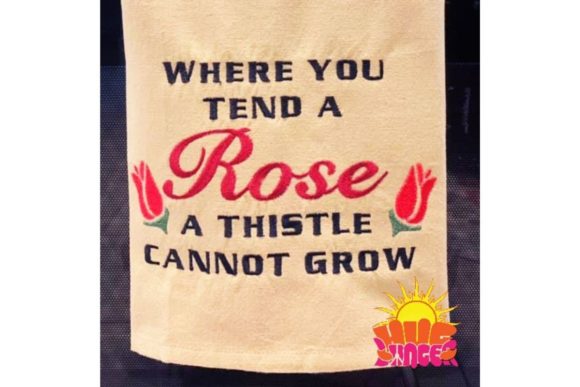
Tend a Rose Embroidery Design: A Craft Fair Seller’s Review
As an embroidery designer preparing for a weekend craft fair, every design I select for my booth must pass a real-world test. It’s not just about aesthetics; it’s about whether it will sell, look great on a physical product, and be practical to produce in batches. Today, I’m reviewing Tend a Rose, an embroidery design that reminds us to focus on the good in life. Here’s my professional judgment on how this outdoor quote performs as a craft fair product.
First Impression: Elegant, Rustic, and Quietly Premium
The title Tend a Rose immediately sets a mood. It feels elegant and rustic, not bold or overly cute. It’s a soft, thoughtful statement that carries a premium, handmade quality. This isn’t a loud, funny slogan; it’s a decorative piece that invites a closer look. For a craft fair booth, this subtlety can be a strength—it draws customers who appreciate meaningful, well-crafted items. It fits perfectly within a farmhouse or modern rustic aesthetic, which is consistently popular at handmade markets.
Where Tend a Rose Stands Out on Products
My table display will feature tote bags, aprons, tea towels, caps, patches, and pillow covers. Tend a Rose needs to find its best home.
- Tote Bags & Market Bags: This is a prime candidate. The design feels substantial enough to be a focal point on a bag’s panel. On a neutral canvas tote, it looks premium and giftable.
- Aprons & Kitchen Towels: For apron embroidery or tea towel embroidery, this quote works beautifully. It’s a gentle reminder in a practical space, enhancing the product’s value.
- Pillow Covers: As a decorative element on a pillow, Tend a Rose becomes a lovely home accent. It feels repeatable for batch production on simple linen covers.
- Embroidered Patches: This is a careful-use note. The lettering and rose detail must be checked for clarity at smaller sizes. If the machine embroidery design has very small lettering or dense stitch areas, it might lose definition as a small patch.
- Caps & Fabric Pouches: On curved cap surfaces or textured towels, the design needs a good stabilizer and careful thread contrast to maintain its elegance. It’s likely better as a medium-sized accent on these items.
For immediate buyer engagement at the booth, having a beautifully embroidered tote bag as a sample is key. Customers notice the quality of the stitching and the sentiment first.
Practical Production for Sellers
Turning a digital embroidery file into a sellable handmade product requires forethought.
Testing Before Batch Production
- Always test on scrap fabric first, especially on the fabrics you plan to sell (like cotton canvas for tote bags or linen for towels).
- Check thread contrast on both light and dark fabric. A design like this needs clear, readable stitches.
- Review spacing and stitch density. Dense stitch areas can be tough on textured towels or thicker fabric, affecting the finish and production time.
- Confirm the hoop size required. Since the product description states it comes with multiple embroidery file formats for multiple machines, you must check your specific file for the optimal hoop size for your chosen product. Don’t assume.
- Create at least one real mockup—a finished tote bag or pillow cover—before committing to bulk production. This is your best tool for judging visual appeal and handmade quality.
Photography & Online Sales
For Etsy sellers and small shop owners, how Tend a Rose photographs is crucial. It should photograph well for online listings because it’s not overly busy; the focus is on a single, elegant statement. Use printable mockups wisely, but always showcase real finished products. The texture of the embroidery on fabric adds perceived value in photos.
Craft Fair Booth Display Strategy
Your booth display strength relies on grouping products thoughtfully. I would display Tend a Rose products together to create a theme. A set of an embroidered tote bag, a matching tea towel, and a small pouch creates a compelling gift set narrative. This boosts customer attention and allows them to visualize the design across different uses. The consistent, brand-friendly message of focusing on the good adds a layer of storytelling to your table.
Final Designer Notes & Commercial Considerations
As a professional, my last points are practical reminders for any creative entrepreneur using this design.
Before selling finished products, confirm commercial licensing explicitly. The product description mentions it’s a machine embroidery design with multiple formats, but the license terms for commercial use are not stated here. Always verify this with the designer or distributor.
Use the right stabilizer for each fabric type—this is non-negotiable for maintaining the design’s clarity, especially on items like caps or textured market bags.
Compare fabric colors in person. A design with a rose element may pop differently on cream versus white, or on slate gray versus black.
Finally, remember that Tend a Rose is inherently a quiet design. Its selling power comes from its emotional resonance and execution quality. It won’t shout from your booth; it will invite a conversation. That’s the kind of product that often leads to a meaningful sale and a happy customer, which is, after all, the good in life we’re tending to.